Stronger Education for Every Child and Adult
Stronger Education for Every Child and Adult policy details
K-12 Background
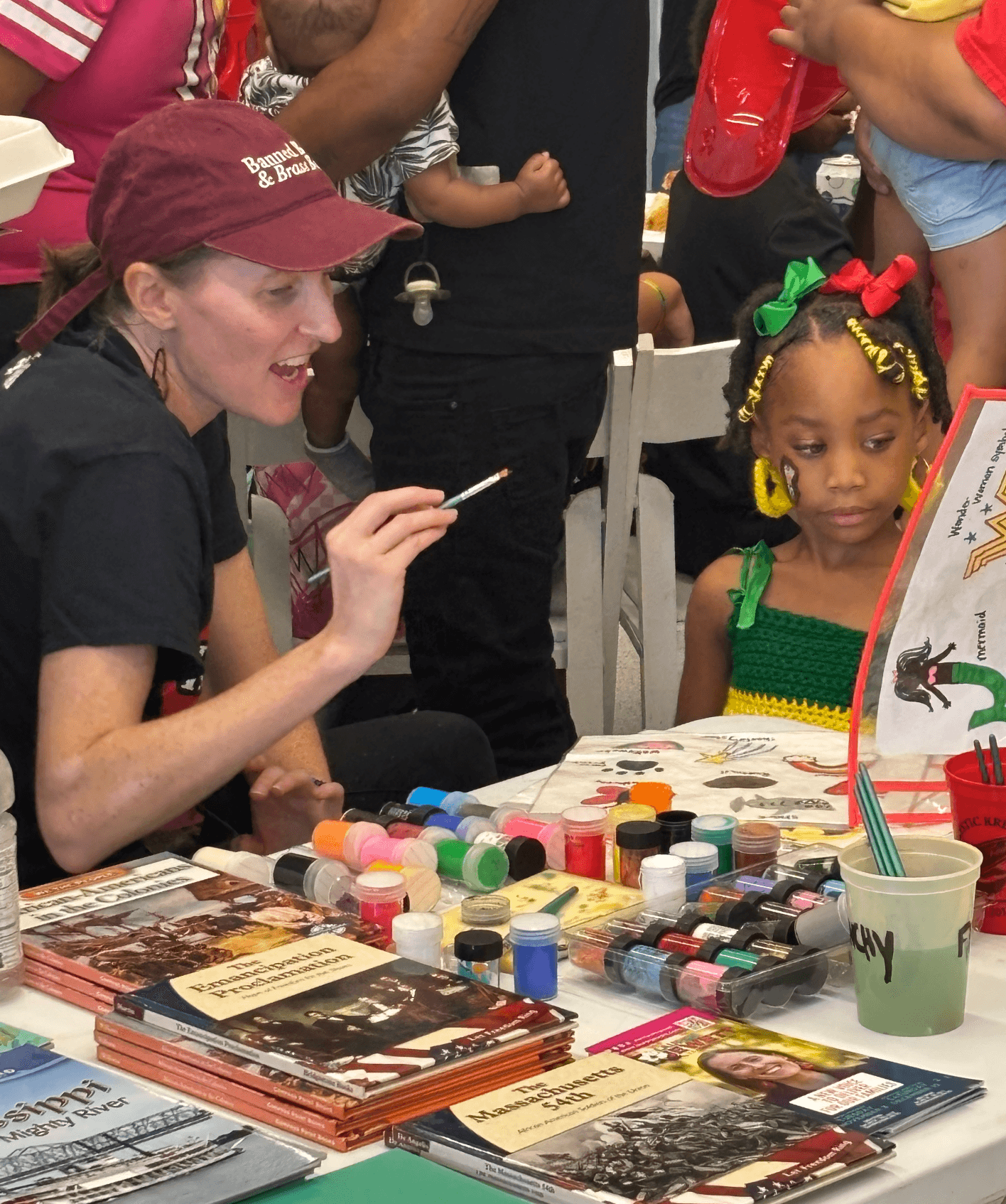
Lauren is a product of public education and has spent 17 years delivering special education services in Louisiana’s classrooms. She knows what it looks like when Congress breaks its promise: a teacher is left paying for supplies or professional development out of pocket, students are overlooked in overcrowded classrooms, and parents have to navigate a system to fight for services their child is legally entitled to but can't get.
For fifty years, Congress promised to cover 40% of the cost of educating students with disabilities. Today, the federal share is under 12 percent — leaving states like Louisiana to make up the difference, or make cuts. Additionally, as our federal administration has pushed to dismantle the Department of Education and move these programs to the Department of Health and Human Services, they're stripping away the oversight that makes IDEA protections real and not just promises on paper. Gutting the Department doesn't shrink government waste. It removes the one watchdog making sure schools follow the law for the kids who need it most.
These failures don't stay in Washington. They land on teachers, and on the students who need the most support and get the least. In states like Louisiana, where they only get a fraction of the special education funding it is owed, this is devastating. Louisiana's schools still rank among the bottom 15 states nationally. Nearly one in six students don't graduate high school. Teachers here have worked hard to ensure students make gains in reading and math, but earn about $56,000, well below the national average, all while school funding has stagnated.
Nationally, teacher pay has stagnated for a decade while the cost of living escalates. Special education classrooms are short-staffed. Funding formulas built decades ago haven't caught up to what students need today. This is especially true for students with disabilities, our multilingual learners, and students facing adverse childhood experiences such as trauma and poverty.
Instead of investing in our schools and the public good of public education, politicians and billionaires are attacking the people who teach and learn in them. Teachers are being vilified for teaching honest history and real civics which are the very subjects that build informed citizens. Cuts to school meal programs mean kids go hungry during the school day and are unable to focus and learn because Washington decided a lunch tray was expendable. Grant funding for arts and music education programs are constantly at the whim of congressional and departmental budget cycles. All of these things make it difficult for teachers to do their jobs and harder for kids to learn.
Lauren knows that ensuring a quality education for kids with disabilities uplifts all kids. She knows it will take a member of Congress who has hands-on experience in our schools to fight for the investment our students were promised fifty years ago, support teachers and school staff instead of scapegoating them, and make sure our schools teach students the literacy, social, technology, and critical thinking skills needed to take on our evolving world.
Lauren’s K-12 Priorities in Congress
- Fight to fully fund federal special education law (IDEA- Individuals with Disabilities Education Act) and fight just as hard to keep it where it belongs, at the Department of Education, not scattered across agencies with no expertise in how students with disabilities learn
- Cosponsor federal measures to raise the teacher pay floor to pay teachers what they’re worth and end the decade-long stagnation that's driving educators out of the classroom
- Invest in both job training and college prep so students have multiple paths to success
- Protect and expand Title II funding for educator recruitment, retention, and training
- Fight for increased Title I funding to close the resource gap for schools serving students in low-income communities
- Oppose billionaire backed voucher and educational savings account schemes that jeopardize public school funding
- Push to restore and protect NEA, NEH, and IMLS grants that keep music, art, and cultural programs in schools and communities
- Defend the right of educators to teach honest history and real civics, free from political interference because informed citizens start with an honest education
- Establish universal pre-kindergarten programs for all 3 and 4 year olds and ensure we have strong Head Start and Early Steps programs
- Support our multilingual learners by advocating for funding for ELL programs, certified staff, and resources for immigrant and refugee students
Higher Education Background
The failure doesn't end at graduation. The same Congress that's underfunding K-12 and attacking teachers is making college less affordable on the other end. They’re raising the cost of borrowing, taxing loan forgiveness as income, and causing a shortfall in the Pell Grant program that could leave students without aid in just a few years. A student who makes it through our K-12 system in schools in Louisiana and in states across the country shouldn't graduate into a higher education system where the challenges are already stacked against them.
Higher education is becoming more out of reach, not less. The "One Big Beautiful Bill Act" raised the cost of borrowing for Louisiana students and caps graduate student loans at $20,500 per year with a $100,000 lifetime limit. Starting in 2026, any forgiven student debt is taxable. Repayment plans are being consolidated into a system where borrowers can be locked into payments for up to 30 years.
Meanwhile, the program millions of Louisiana students rely on to even get to college is running out of money. The Pell Grant program is projected to face a cumulative 10-year shortfall exceeding $100 billion, and without congressional action, could see a disruption in full awards as soon as the 2028-2029 school year.
Lauren’s Higher Education Priorities in Congress
- Fight to fully fund the Pell Grant program and close the shortfall before it cuts off aid to the students who need it most.
- Oppose taxing forgiven student debt as income because this is a policy that punishes borrowers for getting relief they earned.
- Protect and strengthen Public Service Loan Forgiveness for jobs like teachers, nurses, social workers, and first responders
- Cosponsor legislation to lower interest rates on federal student loans and restore reasonable repayment timelines
- Expand access to trade, technical, and community college pathways
- Support debt-free community college and technical training so a two-year degree or certification doesn't start with debt
Because facts matter:

Join Our Fight to Put Working People First.
By providing your mobile number, you agree to receive periodic campaign updates. Message and data rates may apply. Reply STOP to opt out. Read our privacy policy.